
A lightweight foldable mobility scooter makes it much easier to bring your own ride along when you travel. Whether you’re loading it into the car for a weekend with family or packing it up for a flight across the country, a scooter that folds down small and lifts without much strain takes a lot of the hassle out of getting from home to wherever you’re headed.
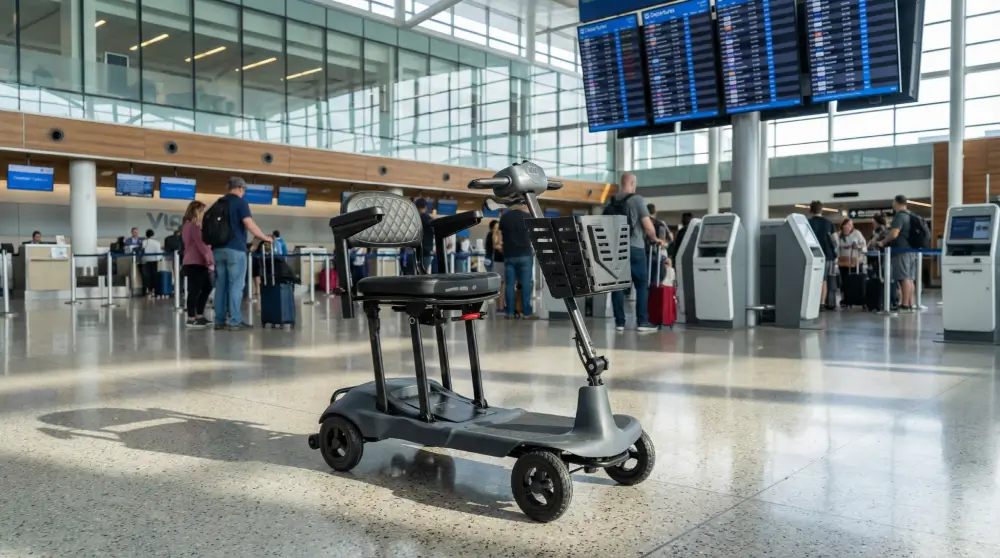
Travel still takes some planning. Airlines, cruise lines, and vehicles each come with their own requirements, and a little preparation before you leave helps your scooter arrive ready to ride. This guide covers what to look for in a travel-friendly folding scooter, how to prepare for a flight, and practical tips for road trips and cruises.
What Makes a Folding Scooter Easy to Travel With
A few specs make the biggest difference once a scooter leaves the house. It’s worth comparing these closely if travel is a big part of your plans:
- Weight with and without the battery: The frame weight tells you what you’ll lift into a trunk, while the total weight tells you what you’re moving overall. A removable battery lets you lift the two separately, which makes loading more manageable.
- Folded dimensions: Compare the folded size against your car trunk, a closet at home, or the storage space where you’re staying. Folded dimensions are listed on each product page.
- Fold style: Manual folds are done by hand, while automatic folds use a motor to collapse and open the scooter. The right choice depends on who will be doing the folding and how often.
- Battery details: Folding scooters built for travel often use smaller-capacity lithium batteries, in part to keep air travel simpler. Knowing your battery’s voltage and amp-hour rating makes airline conversations much easier.
Monarch’s Folding Range at a Glance
Monarch Mobility’s folding mobility scooter range includes five models, and each one is listed as airline and cruise approved. All five share a 275 lb maximum user weight, a 4 mph top speed, a removable 10.4Ah lithium battery, and up to 9 miles of range per charge, depending on load and terrain. Where they differ is in weight, fold style, and features:
- The Genie folds manually and weighs 36 lbs without the battery, with a magnesium frame and rear suspension.
- The Genie Auto uses a remote-controlled motorized fold and weighs 39 lbs without the battery, with rear suspension.
- The Genie Ultralight weighs 27 lbs without the battery and folds manually, with pin-release fold-down arms for a more compact fold.
- The Smarti Plus offers one-touch automatic folding at 35 lbs without the battery, plus NFC keyless start and USB-A and USB-C charging.
- The Supa Carbon Lite uses a carbon fiber frame to come in at 29 lbs without the battery, with a manual fold, rear suspension, and NFC keyless start.
Monarch Mobility products are sold through authorized dealers, so a local dealer is the best place to see these models in person, try the fold yourself, and get a feel for how each one lifts.
Getting Ready to Fly
Airline rules for mobility devices and lithium batteries vary from carrier to carrier, and they can change over time. The most reliable information will always come from the airline you’re flying with, so plan to contact them before you book and again before you travel.
The standard 10.4Ah batteries supplied with Monarch’s scooters are rated at 269Wh, below the FAA’s 300Wh limit for lithium-ion batteries removed from mobility aids. Before flying, contact your airline to confirm acceptance of your scooter and battery, whether the battery must be removed, and any documentation or handling requirements.
Some airlines ask for battery safety documentation, such as a UN 38.3 test summary, and your dealer can help you get that information if your carrier requests it.
Questions to Ask Your Airline Ahead of Time
Most airlines have an accessibility or special assistance team that handles mobility devices. When you reach them, it helps to have your scooter’s model name, weight, folded dimensions, and battery details ready. Useful questions include:
- Will the scooter travel in the cabin, be checked at the gate, or go in the cargo hold?
- Does the battery need to be removed, and if so, where should it be carried?
- What battery information do you need, and in what format?
- Do you need any documentation for the battery before the day of travel?
- How much advance notice do you need, and is there a form to complete?
Many carriers describe battery limits in watt-hours (Wh). You can find this figure by multiplying the battery’s voltage by its amp-hour rating. For example, Monarch’s standard 10.4Ah battery is listed at 25.9V, which works out to 269Wh. Check the figures for your own battery, then share that number with your airline and let them confirm whether it meets their policy. It’s also a good idea to note the name of the person you spoke with and keep any written confirmation handy at check-in.
At the Airport
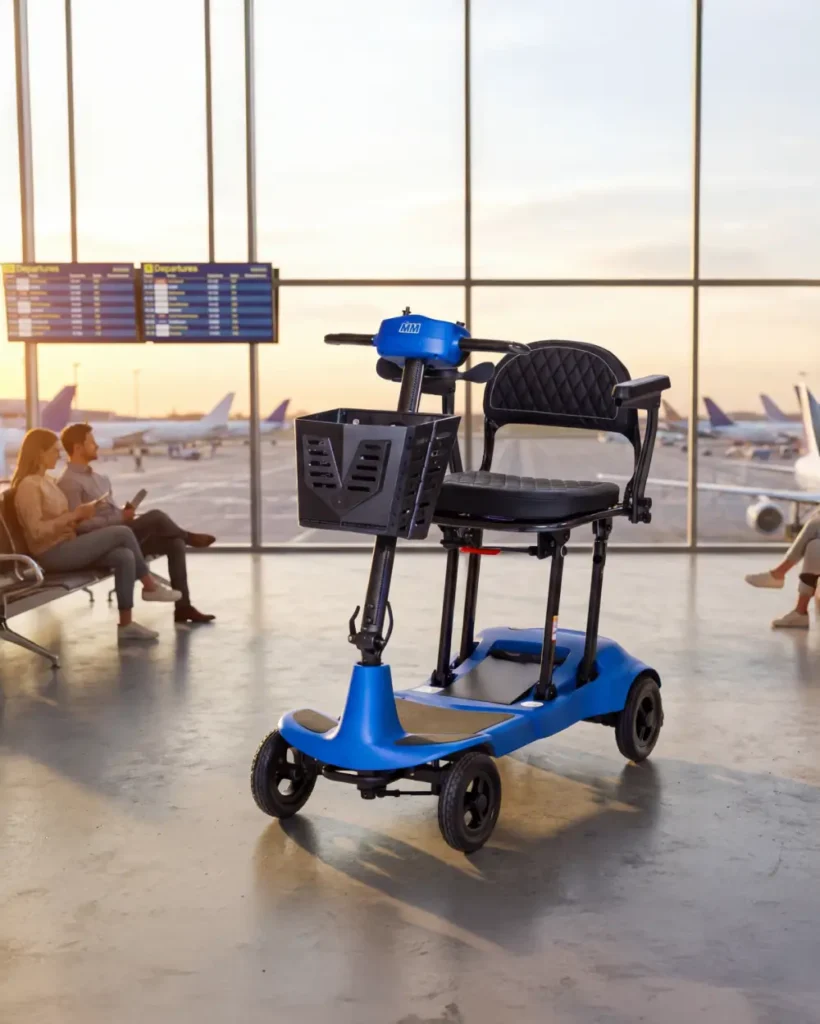
Give yourself extra time at check-in so the airline can tag and process your scooter without rushing. If you have questions about security screening with a mobility device, the TSA Cares helpline assists travelers with disabilities and medical conditions, and TSA suggests calling about 72 hours before your flight.
Before you hand off your scooter, take off anything that could come loose in transit, like a basket, and keep your key or key fob, charger, and any battery paperwork with you. A protective case can also help. Monarch’s Folding Scooter Travel Bag fits the Genie, Genie Auto, Supa Carbon Lite, and Smarti Plus, with four castor wheels, carry handles, and a soft-shell design that helps protect against scratches, dirt, and damage in transit. Airline requirements for bagged devices vary, so check with your carrier before you pack.
Road Trip Tips for Car Travel
Car travel gives you the most control over how your scooter is handled, and a folding model makes loading and unloading part of a quick routine. A few habits help each stop go smoothly.
Start by measuring your trunk or cargo area against your scooter’s folded dimensions, especially if you’re traveling in a rental or someone else’s vehicle. When it’s time to load, lift the battery out first and then lift the frame. Once it’s in, make sure the scooter is secured so it doesn’t shift while you drive.
Temperature matters for lithium batteries, so avoid leaving the battery in a hot or very cold car for long stretches. Bring it inside when you stop for the night and charge it there. Monarch lists an 8 to 10 hour recharge time for its 10.4Ah batteries, which makes overnight charging a practical habit. Pack your charger every time, and consider bringing a charged spare battery for longer days out, since actual range depends on terrain, load, and conditions.
If lifting the scooter into the vehicle is the hard part, Monarch’s Atlas 4 portable car lift is worth a look. It installs without drilling or permanent modifications, lifts up to 88 lbs by remote control, and moves between vehicles. Your dealer can confirm whether it’s compatible with your car.
Heading Out on a Cruise
Monarch lists its folding range as cruise approved, but each cruise line sets its own policies for mobility devices on board and in port. Contact the cruise line’s accessibility team before you book and ask about storing the scooter in your cabin, charging the battery on board, and getting on and off the ship at each port. A compact fold can make it easier to keep the scooter in your cabin when you aren’t using it, so have the folded dimensions ready when you call.
Frequently Asked Questions
Plan Your Next Trip With the Right Scooter
Traveling with a lightweight foldable mobility scooter comes down to choosing a model that fits how you travel and checking the rules before each trip. Once you know your scooter’s weight, folded size, and battery details, conversations with airlines and cruise lines get much simpler, and loading the car becomes routine. When you’re ready to compare models in person, find a local Monarch Mobility dealer who can walk you through the folding range and help you choose the right fit for your travel plans.