
Choosing a mobility scooter is a personal decision, and the right answer looks different for everyone. The features that matter most depend on how you move through your day, where you go, who you’re with, and what kind of support you need.
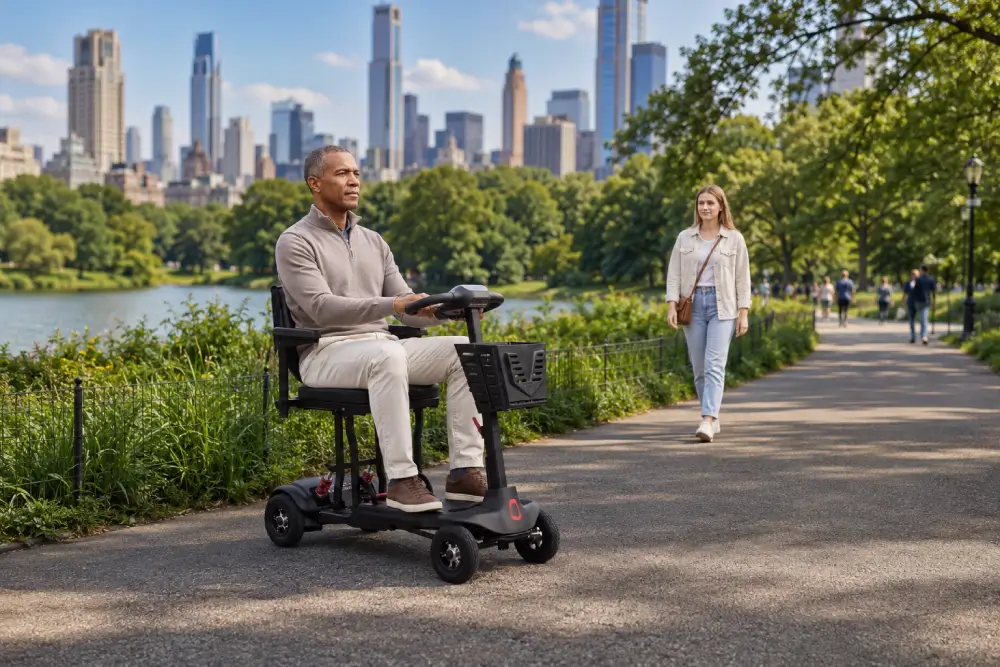
There are plenty of options on the market, and that large variety is great! But you may also be confused about which one is best for you when there are so many choices to pick from. This guide walks through the key factors worth considering before you visit a dealer, so you arrive with the right questions and leave with confidence.
Start with How You Plan to Use it
Before comparing specs, it helps to think honestly about how a scooter will fit into your actual routine. A scooter that works well for someone who needs it primarily around the home will look very different from one designed to fold into a vehicle and go wherever the day takes you.
Consider the kinds of surfaces you’ll typically cover. Sidewalks, indoor spaces, and smooth paths have different demands than uneven outdoor terrain or inclines. Think about how far you tend to travel in a typical outing, and whether you’ll need to transport the scooter regularly in a vehicle. Think about whether you’ll be managing the scooter independently at every step, or whether a family member or caregiver will sometimes help with loading and setup.
There’s no single right answer to any of these questions. The point is to build an honest picture of your needs before you start narrowing down options, so the choice you make works for the kind of lifestyle you love to live.
Weight and Portability
If you’ll be lifting the scooter into a vehicle, or if someone else will be doing that for you, product weight matters more than almost any other spec. Folding scooters vary considerably in weight even though our scooters are all lightweight, with many models coming in under 30 lbs without the battery.
It’s worth checking the weight with the battery included, since that’s the figure that reflects what you’ll actually be handling at the end of a day out and if you want to go as light as possible, we have options for you. Although the batteries are very easy to remove, giving you even less weight to handle.
Folding mechanisms are equally as important. Manual folding requires a physical action to collapse the scooter, while automatic folding does the work at the press of a button. For users with limited strength or dexterity, the difference between a manual and automatic fold can be the difference between managing independently and needing help every time.
If portability is a priority, also consider the scooter’s folded dimensions. A compact folded footprint makes storage at home and in a vehicle trunk considerably more straightforward.
User Weight Capacity
Every scooter has a maximum user weight rating, and it’s important to choose a model rated for your weight with a reasonable comfort margin. Exceeding a scooter’s rated capacity affects both safety and performance, including range and handling.
User weight capacity varies across the Monarch Mobility range. Most folding models support users up to 275 lbs. For users who need a higher capacity, the Obsidian is rated for users up to 450 lbs and is built specifically for heavier duty use, with a more powerful motor and a design oriented toward extended outdoor journeys. Confirming capacity before you buy is a straightforward step that’s easy to overlook in favor of more visible features.
Speed, Range, and Battery
Most folding mobility scooters are designed for everyday use at moderate speeds. The majority of models in the Monarch Mobility range have a top speed of 4 mph and offer up to 9 miles of range per charge, subject to user weight and terrain. The Obsidian reaches 8 mph and is built for longer, more demanding use.
Range figures are always approximate and worth treating as a ceiling rather than a guarantee. Heavier users, steeper terrain, and battery age will all reduce the distance you get on a single charge. If your typical outings push toward the upper end of a scooter’s rated range, it’s worth factoring that in when choosing rather than discovering it later.
All Monarch Mobility scooters run on lithium batteries. Most models in the range carry airline and cruise approval with removable batteries, though it’s always worth confirming specific requirements with your carrier before you travel.
Comfort and Adjustability
A scooter you use every day should fit well, and fit is about more than seat size. Seat width and depth, seat-to-deck height, armrest adjustability, and tiller position all affect how comfortable and in control you feel over the course of a ride. Most models in the Monarch Mobility range feature padded seats and adjustable tillers as standard. Some also include rear suspension, which absorbs bumps and surface irregularities for a noticeably smoother ride.
Comfort features carry more weight the longer your typical outing tends to be. A seat and suspension setup that feels adequate for a short trip around the block may feel meaningfully different after an hour of use on mixed surfaces. If longer journeys are part of your picture, prioritize suspension and seat quality alongside the headline specs.
Technology and Additional Features
Some scooters include features beyond the basics that are worth factoring in if they’d genuinely improve day-to-day use. NFC keyless start, available on select models, replaces a traditional key with a tap-to-start system that adds a layer of security and convenience. Select models also include built-in lighting, USB charging ports, and a digital display showing battery level and ride data — features that add up over the course of regular use.
Frame material is another consideration some buyers overlook. Certain models use magnesium or carbon fiber frames, which contribute to a lighter overall weight. If minimizing weight is a priority, it’s worth asking about frame material alongside the headline weight figure.
Frequently Asked Questions
How do I know which mobility scooter is right for me?
The best starting point is thinking through how you plan to use it — the surfaces you’ll cover, how far you typically travel, whether you’ll need to transport it regularly, and any physical considerations that affect ease of use. A dealer can then help you match those needs to the right model.
Do I need a prescription to buy a mobility scooter?
Requirements vary depending on your situation and insurance coverage. It’s worth checking with your dealer and, if applicable, your insurance provider about what documentation may be needed.
Can I take a mobility scooter on a plane or cruise?
Several models in the Monarch Mobility range carry airline and cruise approval. Battery documentation may be required by some carriers, which your dealer can assist with. Always confirm requirements directly with your carrier before traveling.
Where can I try a Monarch Mobility scooter before buying?
Monarch Mobility products are available through an authorized dealer network across the US. Find a location near you to see the range in person before you commit.
The Right Scooter Is the One That Works for Your Life
The best mobility scooter is the one that fits how you live. The factors above give you a framework for thinking through the decision, but nothing replaces getting hands-on time with your options. Explore the full Monarch Mobility scooter range to see what’s available, and connect with a local dealer when you’re ready to take the next step.