
Choosing between a lightweight scooter and a heavy duty 4 wheel scooter comes down to how, where, and how far you plan to ride. Both types get you where you’re going, but they’re built around different priorities: one favors portability, the other favors capacity and stability.
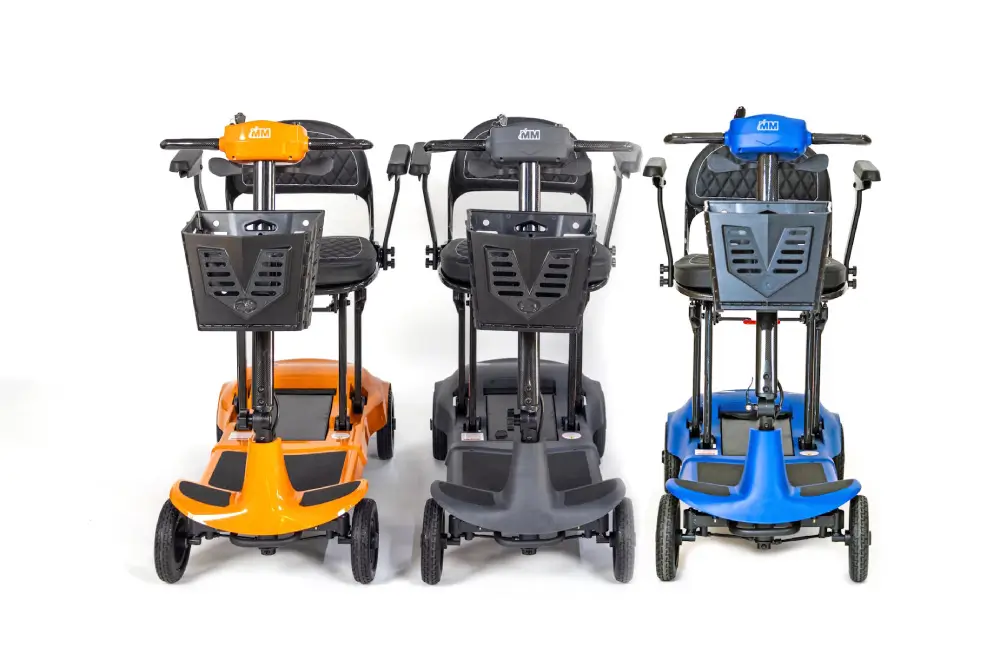
This guide breaks down the practical differences, so you can figure out which fits your daily routine, your storage situation, and the terrain you’ll actually be covering.
What Makes a Scooter Lightweight
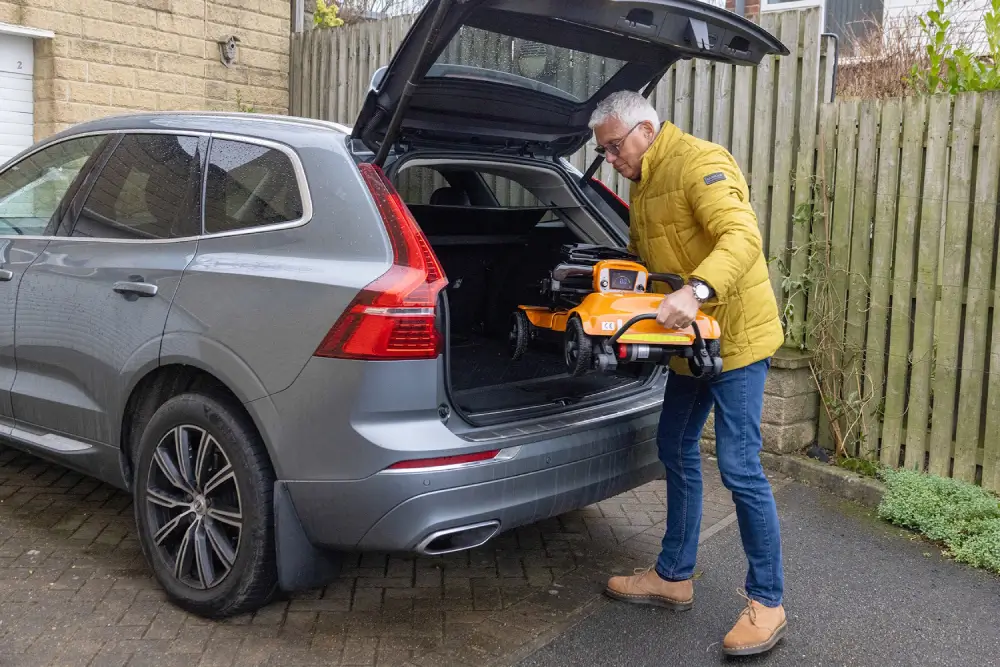
Lightweight mobility scooters are built around one main goal: being easy to lift, fold, and carry. Most weigh in the range of roughly 27 to 39 pounds without the battery, which makes them manageable to load into a car trunk, stow in a closet, or bring along on a trip. Folding mechanisms vary by model. Some fold manually with a simple motion, while others fold and unfold automatically at the press of a button, so the amount of physical effort involved depends on which one you choose. Airline-friendly, removable batteries are common across this category too, which keeps travel by car, cruise, or plane fairly straightforward.
These scooters typically support a maximum user weight of 275 pounds and top out at about 4 mph. That combination makes them a strong fit for errands, short outings, visiting friends, or everyday trips around town where portability matters more than covering long distances. Most also use solid, puncture-proof tires, so a flat isn’t something you have to plan around.
What Makes a Scooter Heavy Duty
A heavy duty 4 wheel scooter is built differently from the start. Instead of prioritizing folding and portability, the focus shifts to a sturdier frame, a higher top speed, and a much higher weight capacity, all aimed at longer outings and more demanding everyday use.
The Obsidian is a good example of what this category looks like in practice: a heavier frame built for a higher top speed, a higher weight capacity, and longer stretches of everyday use rather than folding down for the trunk.
Weight Capacity Is Usually the Deciding Factor
If there’s one spec that users often look for, it is weight capacity. Lightweight scooters top out well below what a heavy duty model can handle. If you’re closer to or above a lightweight scooter’s threshold, a heavy duty scooter isn’t just a preference, it’s the option that’s actually built to support you safely and comfortably over time.
Portability vs. Stability
This is really the trade-off at the heart of the decision. Lightweight scooters fold down small and lift easily, which makes them a strong fit if you need to load one into a car regularly, store it in a tight space, or fly with it. Heavy duty scooters trade that portability for a larger, sturdier build.
They’re not designed to fold down into a car trunk the way a lightweight model does, but that same larger frame is what gives them a higher weight capacity and a steadier ride, along with the room for a more substantial seat and added comfort features.
Comfort and Ride Feel
Both categories are built with comfort in mind, just in different ways. Many lightweight models include a padded seat, adjustable armrests, and rear suspension to smooth out bumps on sidewalks and pathways, and some also include USB charging ports for keeping a phone topped off on the go. Heavy duty scooters take that further, with seating built for longer stretches of use and more room to fine-tune the fit to you.
Where You’ll Actually Be Riding
Think about the terrain and distance you cover most often, not just occasionally. Smooth sidewalks, indoor spaces, and short local trips are well within reach for a lightweight scooter’s 4 mph top speed and compact build. If your routine involves longer distances, road and pavement use, or you simply want the reassurance of a higher top speed for getting places faster, a heavy duty scooter’s build is aimed at exactly that kind of use.
Every 4 wheel mobility scooter in either category is designed around stability, but the heavier build takes that a step further for more demanding routines.
Questions to Ask Yourself Before Choosing
A few questions can point you toward the right category fast:
- Is a lightweight scooter’s typical capacity enough for my needs, or would a heavy duty model’s higher capacity be a better fit?
- Do I need to lift or fold the scooter regularly, for car travel, storage, or flying?
- How far do I typically travel in a single outing?
- What kind of terrain do I cover most, smooth and flat, or longer stretches and uneven ground?
- How much storage space do I actually have at home?
Getting the Right Fit
There’s no single right answer here, only the answer that fits how you actually use a scooter day to day. If you’re still weighing the options, a local dealer can walk you through both categories in person and help you compare the fit before you decide. You can find a local dealer to get started.