
Choosing the right mobility scooter comes down to one big trade-off: how much power and range you need versus how easy the scooter is to store, lift, and travel with. For many riders, a folding mobility scooter solves that trade-off better than any other design. It collapses down small enough for a car trunk, a closet, or even for taking on a cruise, then opens back up in seconds when you need it.
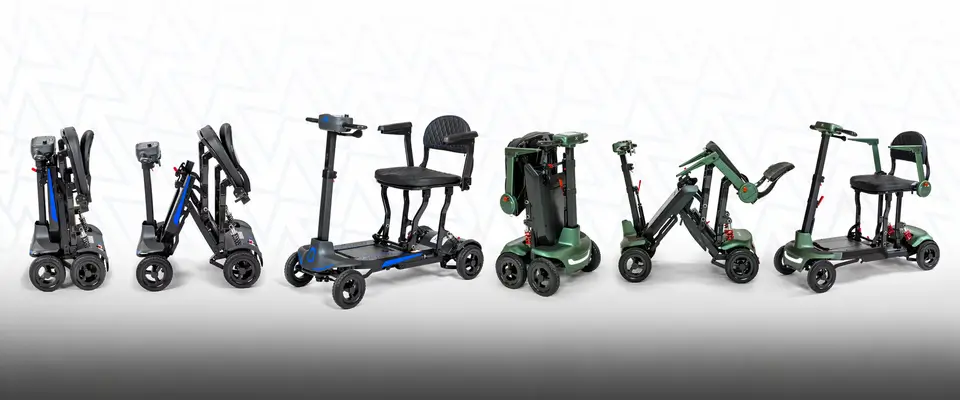
This guide walks through what a folding mobility scooter actually is, the features worth comparing before you buy, and how to figure out whether one fits your daily routine.
What Is a Folding Mobility Scooter?
A folding mobility scooter is a type of electric scooter built around a hinged or collapsible frame, so it can be reduced to a smaller, more compact shape for storage or transport. Unlike traditional mobility scooters, which are often too large or heavy to lift into a vehicle without a ramp or lift, folding models are designed from the ground up around portability. Most fold in a handful of steps, some with a manual mechanism, others with a fully automatic fold triggered by a button or key fob.
The trade-off is usually battery capacity and top speed. Folding scooters tend to prioritize a lighter frame over a bigger battery or heavier-duty motor, which is part of why they’re best suited to shorter trips and everyday errands rather than long, all-day outdoor use.
Benefits of a Folding Mobility Scooter
The appeal of a folding design comes down to a few practical advantages:
- Easier transport. A folded scooter fits in a car trunk, an SUV back seat, or checked airline luggage without needing a ramp, hoist, or second person to help load it.
- Simpler storage. Folded down, most models take up closet space rather than garage space, which matters for apartments or smaller homes.
- More spontaneity. Because loading and unloading takes seconds rather than several minutes, a folding scooter makes last-minute plans, a lunch out, a same-day appointment, more realistic.
- Lower physical strain. Many folding scooters are built with lighter materials specifically so lifting or wheeling the folded unit doesn’t require significant strength.
These benefits are why folding models are often the first recommendation for riders who travel frequently or don’t have a dedicated vehicle lift. For many people, the deciding factor isn’t range or top speed at all, it’s whether the scooter fits into daily life without becoming its own logistical challenge.
Key Features to Compare Before Buying
Not all folding mobility scooters are built the same way. A few specifications make the biggest difference in day-to-day use.
Weight and Folded Dimensions
Total weight affects how easy the scooter is to lift into a trunk or up a set of stairs. Folded dimensions determine whether it fits in a smaller car or a specific closet space. Modern ultralight folding scooters can weigh under 30lbs while some older or larger folding models may weigh closer to 50-60lbs. If airline travel is a priority, check the folded dimensions against carry-on or checked baggage limits before buying.
Fold Mechanism
Folding scooters generally use one of two mechanisms. Manual folds require the rider (or a companion) to fold the frame by hand, usually in a few steps. Automatic folds use a motor to collapse and expand the scooter at the push of a button, which is easier for riders with limited hand strength or mobility but usually adds weight and cost. Neither is objectively better, the right choice depends on who’s doing the folding and how often. While some older models will fold, they also require the user to break down parts of the scooter in order to fold it. These ones require more time and effort compared to the all in one folding models.
Battery Range
Battery range on folding scooters typically runs shorter than on heavier-duty or four-wheel models, since a smaller, lighter battery keeps the overall weight down. Additionally, the lower battery range keeps the scooters within airline travel compliance requirements – usually around 10-12ah, which means they can be taken onboard commercial aircrafts. Ranges usually fall somewhere between 10 and 20 miles per charge, which covers most errands and outings but is worth checking closely if you plan on longer days out.
Weight Capacity
Every folding scooter has a maximum weight capacity, and exceeding it affects both safety and performance. This spec is worth checking early, since it can rule out models before you get to comparing other features. Advances in carbon fiber technology for scooter frames means that you can now get lightweight models without compromising weight capacity
Seating and Comfort
Because folding scooters are built around portability, seating tends to be more compact than on bulkier models. Look for padded seats, adjustable armrests, and a tiller position that fits your height and posture, especially if you’ll be using the scooter for more than short trips.
Folding Scooters Compared to Other Types
Folding mobility scooters aren’t the right fit for every rider. Lightweight mobility scooters overlap heavily with folding models and often fold as well, but the emphasis is specifically on minimizing weight rather than folded size. 4 wheel mobility scooters trade portability for added stability, which matters more for riders who spend significant time outdoors or on uneven terrain. Heavy duty mobility scooters go further still, built for higher weight capacity and longer range at the cost of size and folding convenience.
If transport and storage are the top priority, a folding mobility scooter is usually the better starting point. If you want to use the scooter all day, every day, one of the other categories may be a better fit.
Who Should Buy a Folding Mobility Scooter
Folding scooters tend to work best for riders who:
- Travel frequently, whether by car, train, or plane, and need equipment that packs down quickly
- Live in an apartment or smaller home without a garage or dedicated storage space
- Handle loading and unloading themselves, without a caregiver or second person to assist
- Use their scooter mainly for errands, appointments, and shorter outings rather than full days outdoors
Riders who need longer battery range, higher weight capacity, or added outdoor stability may be better served by a different category, even if portability is still a consideration.
How to Choose the Right Model
Once you’ve settled on a folding mobility scooter as the right category, narrowing down a specific model comes down to matching specs to your actual routine. Start with weight capacity, since it’s a hard limit rather than a preference. From there, compare folded dimensions against your car trunk or storage space, and check battery range against how far you typically travel in a day. Fold mechanism (manual versus automatic) usually comes down to hand strength and how often you’ll be folding the scooter yourself.
It’s also worth testing a model in person before buying if possible. Fit, comfort, and how a fold mechanism actually feels to operate are hard to judge from specs alone, and a model that looks ideal on paper can feel very different once you’re actually folding and lifting it yourself. Monarch Mobility’s folding mobility scooter lineup includes several models built around different priorities, from ultralight travel scooters to sturdier folding builds with more seating comfort.
What Does a Folding Mobility Scooter Cost?
Pricing for folding mobility scooters varies based on materials, fold mechanism, and battery capacity. Ultralight carbon-fiber models, which use lighter and more expensive materials to minimize weight, typically sit at the higher end of the price range. Standard folding scooters with a steel or aluminum frame and a manual fold mechanism tend to cost less, while automatic-fold models usually fall somewhere in between, reflecting the added motor and hardware.
It’s worth thinking about total cost rather than sticker price alone. A more expensive, lighter model may be worth the difference if it means the scooter actually gets used daily instead of sitting in a closet because it’s too heavy to lift comfortably. Checking current pricing on individual product pages is the most accurate way to compare, since specs and features shift between models.
Frequently Asked Questions
Finding the Right Folding Mobility Scooter
A folding mobility scooter is built around one core idea: independence shouldn’t be limited by how hard equipment is to transport or store. Matching weight, fold mechanism, battery range, and weight capacity to your actual routine is the fastest way to narrow down the right model. Browse the full range of mobility scooters at Monarch Mobility, or visit our Where to Buy page to test a folding model in person before you decide.