
If you’re exploring powered mobility options for the first time, the choice between a mobility scooter and an electric wheelchair can feel unclear. Both are battery-powered, both support independent movement, and both come in a range of sizes and configurations. But they’re designed around different needs, and the right choice depends less on which one sounds better and more on how you actually move through your day.
This guide breaks down the practical differences between the two, so you can approach the decision with a clearer picture of what you’re looking for before you speak to a dealer.
How Each Type of Device Is Designed to Work
A mobility scooter is steered using a tiller — a handlebar-style control in front of the rider — and typically requires the user to have reasonable upper body strength and the ability to sit upright and grip the controls. Most scooters are designed to be ridden in a forward-facing position, with the user actively steering through turns. They tend to have a longer wheelbase and a wider turning radius than electric wheelchairs.
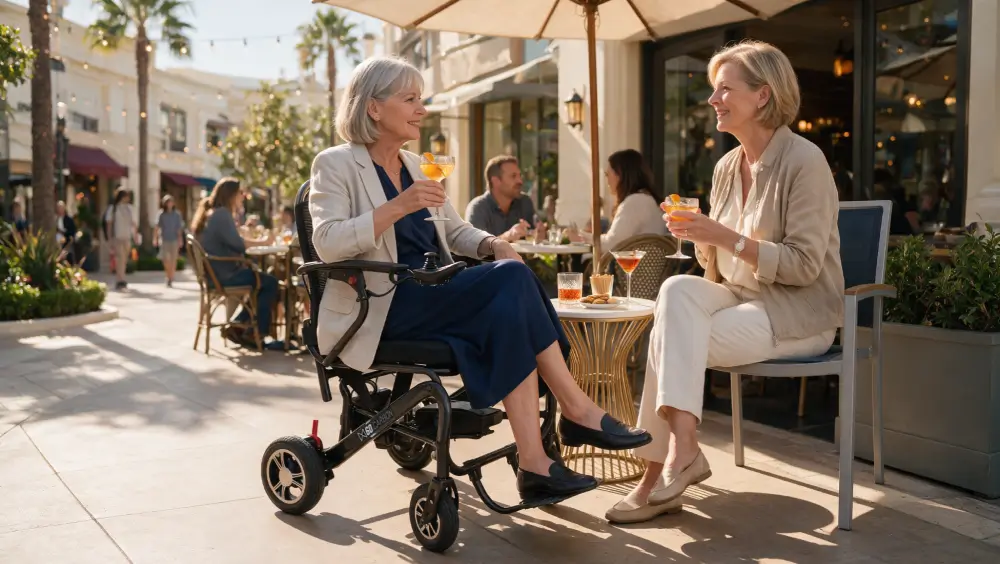
An electric wheelchair, also known as a powerchair, is controlled by a joystick — usually mounted to one of the armrests — and requires far less physical engagement to operate. The joystick allows for precise, 360-degree navigation with minimal hand and wrist movement. Electric wheelchairs are generally more maneuverable in tight spaces and are designed to support users who may have more limited upper body function, as well as those who simply prefer joystick control. Two options built for various users and a variety of situations.
Ease of Use and Physical Requirements
One of the most practical factors in this decision is what the device asks of you physically. Mobility scooters require the user to have enough grip strength and arm mobility to steer the tiller and operate the throttle. For many users this is straightforward, but for those with limited hand function, shoulder issues, or conditions that affect grip, a tiller can become fatiguing over time.
Electric wheelchairs use joystick controls that require significantly less physical effort. Small, precise movements of the hand or fingers are enough to navigate in any direction, making them a natural fit for users who find tiller steering difficult or tiring. The joystick can also typically be repositioned to suit the user’s dominant hand or preferred side.
If physical ease of operation is a primary concern, it’s worth trying both control types with a dealer before making a decision. What reads as simple on paper can feel different in practice.
Turning Radius and Maneuverability
This is one of the areas where electric wheelchairs tend to have a meaningful advantage for indoor use. The Ezi Fold Carbon, for example, has a turning radius of 30.3 inches — tight enough to navigate most doorways, corridors, and indoor spaces without difficulty. Mobility scooters, by comparison, typically require more space to turn. The Genie has a turning radius of 55 inches, and the Genie Ultralight comes in at 50 inches.
If you spend a significant amount of time in smaller indoor spaces — a home with narrow hallways, smaller shops, or crowded environments — turning radius is worth factoring in seriously. If your use is primarily outdoors or in open spaces, the difference becomes less significant.
Portability and Transport
Both mobility scooters and electric wheelchairs in the Monarch Mobility range are designed with portability in mind, and both categories include folding models that are airline and cruise approved.
On the scooter side, folding models range from 27 lbs to 39 lbs without battery depending on the model. On the electric wheelchair side, the Ezi Fold Carbon weighs 35 lbs with battery and folds manually for transport, while the MM60 weighs in at 29lbs without battery.
If portability is central to your decision, these are all strong options. The weight and folded dimensions of the specific model you’re considering matter more than the category it belongs to.
Seating Position and Posture
Mobility scooters position the user in a forward-facing seat, similar to sitting in a chair, with feet on a flat deck. The seat typically swivels to make getting on and off easier, and most models include adjustable armrests and tillers to help with comfort and fit.
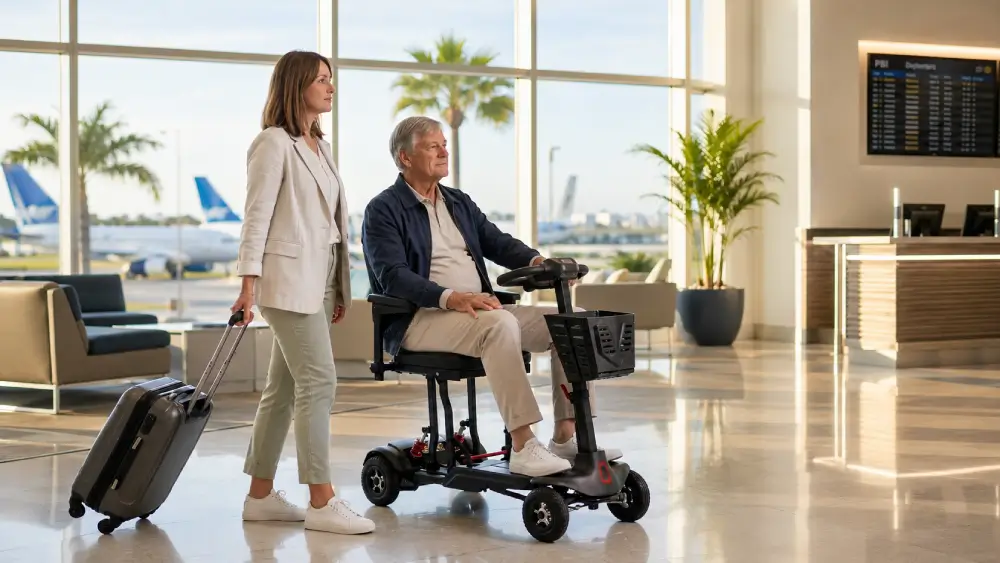
Electric wheelchairs offer a more traditional wheelchair seating position, with footrests rather than a flat deck and a seating configuration that many users find more supportive for longer periods of use. For users who spend extended time on their device, or who have specific postural support needs, this distinction can be significant. A dealer or healthcare professional can help assess which seating configuration suits your situation.
What Monarch Mobility Offers in Both Categories
Monarch Mobility carries both mobility scooters and electric wheelchairs, all classified as FDA Class II Medical Devices. The mobility scooter range includes folding, lightweight, 4-wheel, and heavy duty options. The electric wheelchair range includes the Ezi Fold Carbon, and the MM60 Carbon — all folding, all designed for everyday use and travel.
Both ranges are available through an authorized dealer network, and a dealer can arrange hands-on time with models from either category so you can make the comparison in person rather than on a screen.
Things Worth Thinking Through Before You Visit a Dealer
Finding the right fit starts with knowing your own situation a little better. Consider these factors before you visit a dealer — they’ll help you get to the right answer faster:
- Upper body strength and hand mobility, and whether that’s likely to change over time
- The environments you spend the most time in — indoors, outdoors, or a mix of both
- How independently you want to manage the device from start to finish
- Whether a companion or caregiver is sometimes part of your day-to-day routine
- The kinds of spaces you typically navigate and how much room you have to move
- How often you’d want the device to fold down and travel with you
A dealer can work through these with you in person and put the right options in front of you quickly.
Frequently Asked Questions
Both Options. One Place to Explore Them.
The mobility scooter vs. electric wheelchair decision doesn’t have to be made in isolation. Monarch Mobility carries both, and a dealer can walk you through the practical differences with real products in front of you. Browse the full range online to get oriented, then connect with a dealer to take the next step.