
A little regular care helps keep your scooter working well. Good mobility scooter maintenance starts with the battery, from checking the charge before you head out to plugging in when you get home.
Every lithium-ion battery loses some capacity with use, and how you charge and store it affects how quickly that happens. This checklist walks through what to do before and after each outing, during longer breaks, and when it’s time to call your dealer. Details can vary by model, so treat your owner’s manual as the final word for your scooter.
Quick Checks Before You Ride
A minute or two before you leave helps you plan around the charge you have, so you aren’t running the battery all the way down. Regularly letting the battery drain completely can shorten its usable life. Before you set off:
- Check the battery indicator and make sure you have enough charge to get there and back. Treat your scooter’s listed range as a maximum, since terrain, load, and riding conditions all affect how far a charge will take you.
- Make sure the battery is fully seated in place.
- Look over the tires for visible wear or damage, especially if you often ride on rougher surfaces.
- If your tiller or armrests adjust, set them to a comfortable position and check that they stay put. If a part won’t hold its position, have your dealer take a look.
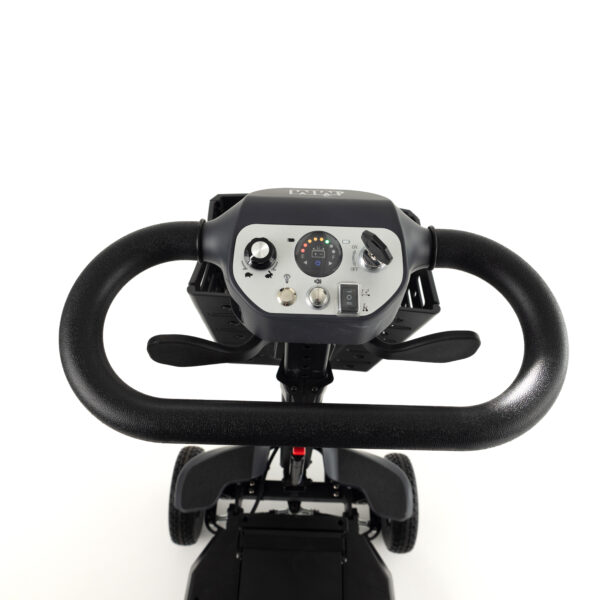
Charging and Cleaning After Every Trip
We recommend charging after every outing, even a short one. Use the charger supplied with your scooter, or a replacement we’ve approved for your exact battery and scooter model. Avoid automotive, lead-acid, and unapproved universal chargers, even if the connector seems to fit.
Charge indoors in a dry, well-ventilated space at room temperature, away from flammable materials, and keep the charger uncovered while it works. A full recharge takes 8 to 10 hours for the batteries that come with Monarch’s folding scooters, so charging overnight works well for many riders. Our guide on how to charge a mobility scooter battery walks through the full process step by step.
Before you put the scooter away, give the frame, seat, and controls a quick wipe with a damp cloth, and avoid spraying water onto the battery compartment, charging port, or other electrical parts. If you’ve been out in the rain, dry the scooter off, since moisture can damage the battery and its connections.
Closer Inspections for Key Parts
Every so often, set aside a few minutes to look your scooter over more carefully. Catching small issues early can help keep them from becoming bigger ones. Check these areas:
- Battery and contacts: Look for dirt, corrosion, or damage on the battery and its connection points.
- Charger and cord: If either shows damage, contact your dealer for a replacement before charging again.
- Tires: Many Monarch scooters use solid, puncture-proof tires, so there’s no air pressure to check. It’s still worth watching for tread wear and checking your owner’s manual for tire care specific to your model.
- Folding mechanism: If your scooter folds, keep the folding parts clear of debris and make sure it opens and closes smoothly. If it feels stiff or catches, don’t force it. Contact your dealer instead.
- Fittings: If a non-electrical fitting, such as a basket attachment or seat bolt, feels loose, check whether it can be hand-tightened. If you’re unsure, ask your dealer before adjusting it.
Where and How to Store Your Scooter
Storage matters for the battery, too. We suggest storing your scooter with a fully charged battery. If it will sit unused for a while, charge the battery every one to two weeks so it doesn’t discharge too far. Your manual may list a specific interval for your model.
Pick your storage spot with temperature in mind. A temperature-controlled indoor space works best, away from spots that get very hot or very cold, like a car trunk in summer or an unheated garage in winter. Our folding scooters use removable batteries, so you can bring the battery inside even when the scooter stays in the garage. Wherever you store it, choose a spot that stays dry.
When to Call Your Dealer
Routine care covers a lot, but some problems need a trained technician and the right parts. Monarch scooters are sold and supported through authorized dealers, so reach out to yours if:
- The scooter won’t power on, even with a charged battery
- The battery won’t charge or is losing range much faster than usual
- The brakes feel inconsistent or unresponsive
- You hear unusual sounds while riding
- The scooter has been dropped or involved in an impact
- Any electrical part shows visible damage
If the battery swells, leaks, or shows physical damage, stop using and charging it, and contact your dealer right away. If a battery smokes, hisses, or catches fire, move away, leave the area, and call 911.
Service needs vary by model and by how often you ride, so ask your dealer about a check-up schedule that fits your routine. To see which fixes you can handle on your own, read our guide to DIY mobility scooter repair.
Frequently Asked Questions
Make Maintenance Part of Your Routine
A short routine before and after each outing, plus an occasional closer look, helps keep your scooter dependable from one trip to the next. When you need a replacement battery, a spare charger, or service for your model, find a local Monarch dealer who can help.