
A rollator and a mobility scooter can both make getting out of the house easier, but they fit into a day in very different ways. A rollator goes along with you while you walk, and a mobility scooter carries you while you sit. The mobility scooter vs. rollator decision usually comes down to the kinds of outings you enjoy, how far they take you, and how you plan to get there. If you’re also comparing scooters with powerchairs, our mobility scooter vs. electric wheelchair guide can help.
Some people want a little support on shorter walks around town, while others want to cover more ground on longer days out. Below, we’ll look at where each one fits, how to store and transport it, what affects the cost, and a few questions to help you decide.
Two Different Ways to Get Around
A rollator is a wheeled walker with handlebars, hand brakes, and usually a built-in seat, often with a basket or bag for small items. You walk behind it, lean on it for support as you go, and lock the brakes when you want to sit and rest. Many fold down for storage.
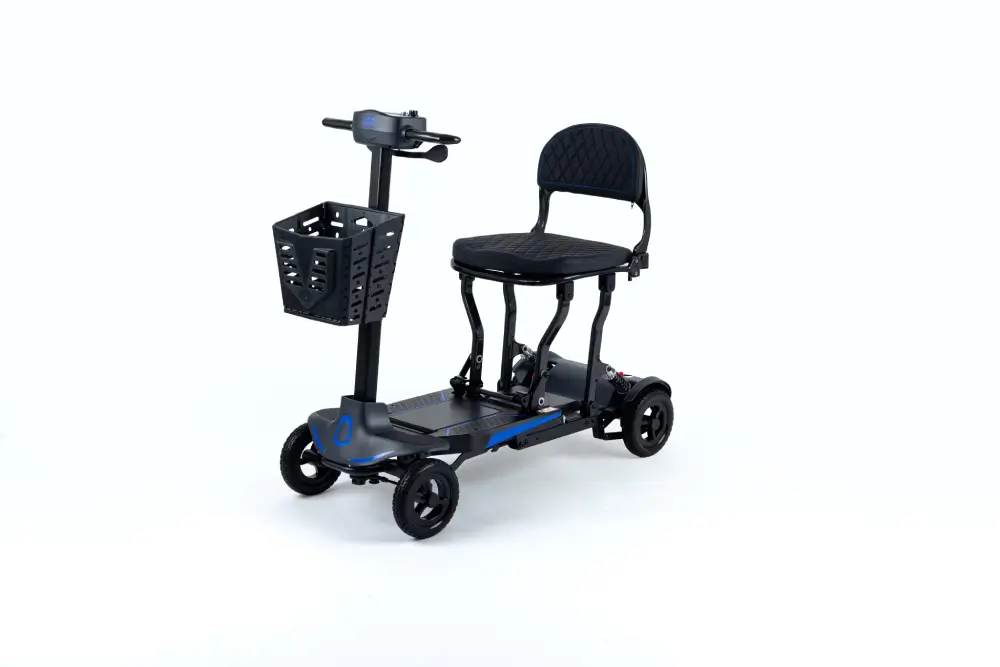
A mobility scooter is battery powered and does the moving for you. You sit on the seat, steer with a handlebar-style tiller, and control your speed with a throttle, so long sidewalks and big parking lots are covered from your seat.
Think About a Typical Week
One of the easiest ways to choose is to look at the outings already on your calendar. A rollator tends to fit well with shorter, walkable plans, like a stroll around the neighborhood, coffee with a friend, a few aisles at the grocery store, or an appointment where you’ll only be on your feet for a little while. You walk at your own pace and have a seat with you whenever you’d like a break.
A mobility scooter tends to fit the days where the walking adds up. Think of an afternoon at a farmers market, a botanical garden, or a big-box store where the parking lot alone feels like a hike. If you’d rather save your energy for browsing, catching up with friends, or cheering at a family member’s game, a scooter handles the distance so you can focus on the reason you went.
Bigger Days Out
Some outings cover a lot more ground than a trip around the block. Zoos, fairgrounds, outdoor festivals, waterfront boardwalks, and theme parks can add up to miles of paths in a single day. Monarch’s folding scooters offer up to 9 miles of range per charge, depending on load and terrain, which gives you room to explore without planning the day around the next place to sit.
The ground under you matters, too. A rollator with larger wheels generally rolls more easily over outdoor paths and uneven sidewalks than one with small wheels. For scooters, Monarch’s range of mobility scooters includes lightweight folding models for everyday trips, 4-wheel models built for added stability, and heavy-duty models made for longer outings.
Getting It There and Back
Before you choose, think about how the device gets from your front door to wherever you’re headed. A rollator is easy to bring along. Many fold small enough for a trunk or back seat, and there’s nothing to charge.
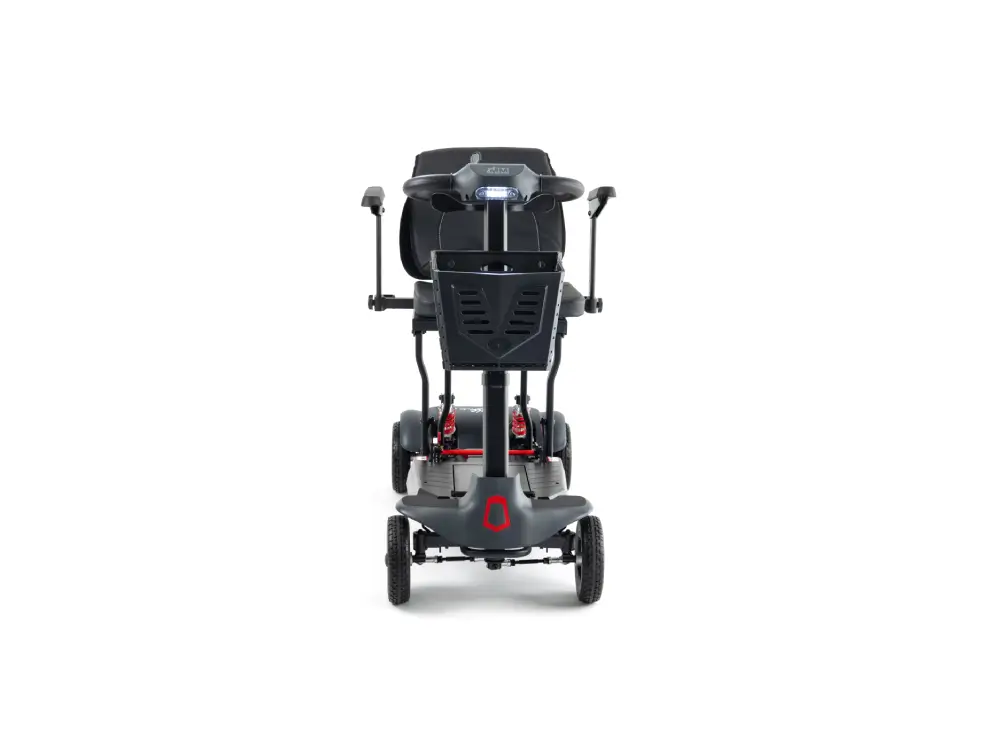
Folding scooters take a few extra steps, and they’re designed with those steps in mind. Monarch’s folding models have removable batteries, so you can load the frame and battery separately, and the frames weigh between 27 and 39 lbs without the battery. If you’d rather not fold by hand, the Smarti Plus folds and unfolds with one touch, and the Genie Auto uses a remote-controlled motorized fold.
If lifting the scooter into the car is the part you’d like help with, Monarch’s Atlas 4 portable car lift raises up to 88 lbs by remote and installs without drilling or permanent changes to the vehicle. A dealer can confirm whether it fits your car. For flights and cruises, Monarch’s folding scooters use airline-friendly batteries, but each airline and cruise line sets its own rules, so it’s worth checking before you book.
What Shapes the Cost
Cost depends on what’s built into each option. A rollator has no motor or battery, so its price mostly comes down to the frame, the wheels, and extras like a padded seat, a backrest, or a storage bag. A mobility scooter has more working parts. Frame materials such as carbon fiber or magnesium, the battery setup, the style of fold, and features like rear suspension or keyless start all play a part. Monarch scooters are sold through authorized dealers, who can share current pricing for each model and its accessories.
Questions to Ask Yourself
If you’re still weighing the two, these questions can help:
- How far do your usual outings take you, and how often do you stop along the way?
- Would you rather walk with support or stay seated for most of the trip?
- What kinds of surfaces do you cover most, like smooth floors, sidewalks, or grassy paths?
- Who will fold and lift the device, and where will it be stored at home?
- Will it ride along in the car, on a plane, or on a cruise?
Shorter walks with a seat close by often point toward a rollator. Longer days and a preference for staying seated often point toward a scooter.
Frequently Asked Questions
Take the Next Step With a Monarch Dealer
The right choice comes down to how much of your day you’d like to spend walking and how far your plans usually take you. If a scooter sounds like a good fit for the outings you have in mind, find a Monarch dealer near you to see the folding range in person, try the fold yourself, and get current pricing.